
The Anatomy of Good Advice
We credential advisors on how well they understand the world, and almost never on how well they understand you. This is our attempt to name the four parts of advice that actually lands, and why the one that matters most is the half nobody has learned to build at scale.
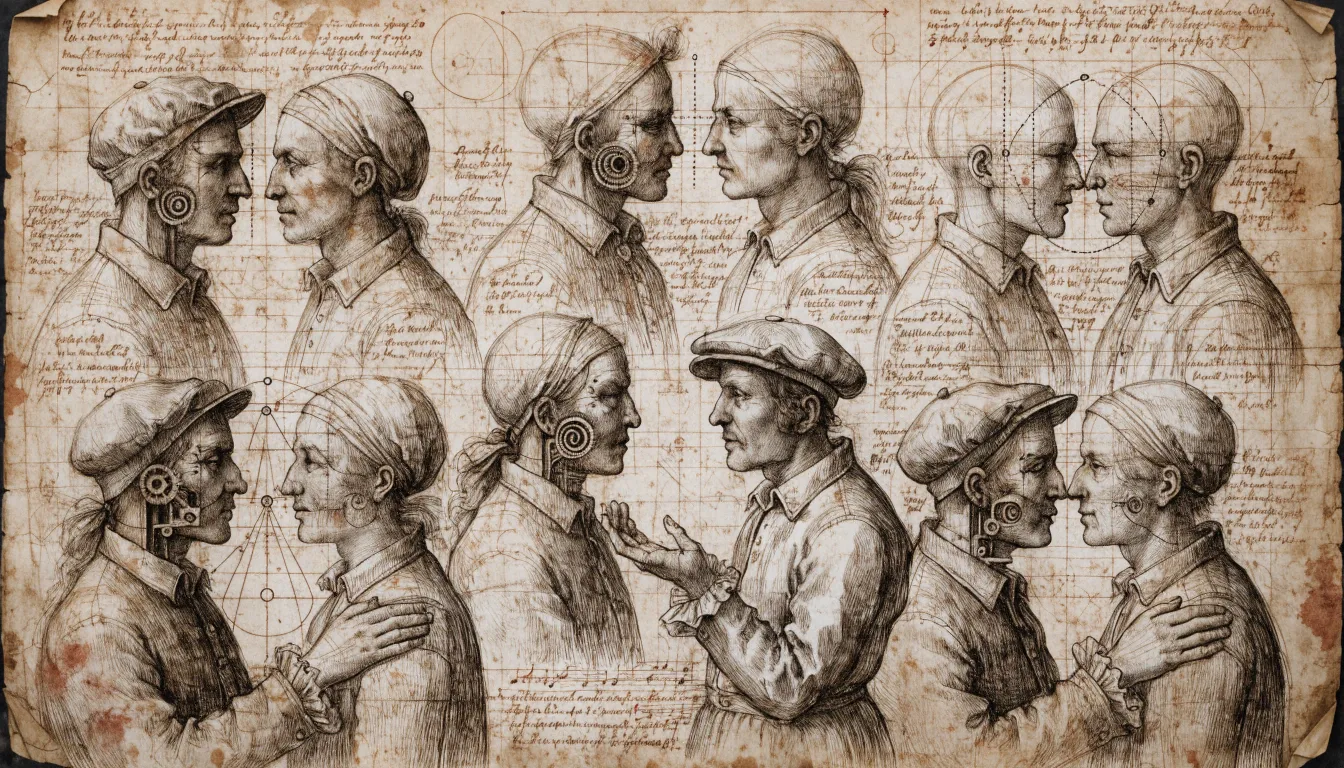
Most advice fails, and it usually fails for a reason we do not name. The advice is not wrong. It simply does not fit the person receiving it.
We tend to treat advice as a knowledge problem. Find someone who knows, get them to tell you what they know, and you are helped. But the world is not short on correct insights. Nearly every good idea you need has already been said clearly by someone, and you can find it in minutes. If knowledge were the bottleneck, we would all be far wiser than we are.
The bottleneck is fit. Advice is a transfer problem. The question is not whether a true and useful thing exists somewhere. It is whether this true and useful thing reaches this particular person, at this particular moment, in a form they can actually use.
One finding makes the point sharply. In a 1996 meta-analysis pooling hundreds of studies, Kluger and DeNisi found that feedback improved performance on average, with an effect size around 0.41. But in more than a third of cases, the feedback made performance worse. The information was often accurate. It still set people back, depending on where it sent their attention. That is what a transfer problem looks like.
Now the genuinely strange part. We credential advisors almost entirely on their model of the world. Degrees, track records, years in the field, the sheer size of what they have seen. All of that measures how well a person understands the domain. None of it measures how well they understand you. And that second half is the one that decides whether the advice lands.
The philosopher Agnes Callard pressed this harder than most. In her 2019 essay "Against Advice", she argues that genuinely helping someone requires such a particular grasp of where they stand that you would almost have to occupy their position yourself. Since advice cannot carry that, she concludes the whole form is broken.
We think she is right about the requirement and wrong about the verdict.
She is right that advice without a real grasp of the receiver is mostly noise. But that does not make advice impossible. It makes advice conditional. Advice works to exactly the degree that the giver has built a model of the receiver. That modeling has simply never been treated as a skill worth naming, teaching, or demanding. So we will name its parts. Advice that actually works has four of them. When one is missing, the whole thing falls flat.
Good advice starts with a real model of you
Not a model of people in general, and not the advisor's own life handed back to you in the second person.
You can usually hear the difference. Someone who is projecting answers fast and certain, because they knew the answer before you finished the question. Someone who is actually helping is slower. They ask. They keep asking after they think they understand, because they have learned that the first version of a problem is rarely the real one.
Here is the turn we want to put on a familiar idea. Understanding the person is usually treated as the step that comes before the advice. We think it is most of the advice. By the time someone truly grasps your situation, the useful conclusion is often plain to both of you, and the sentence they finally say is small. The asking is where the work happens.
There is real evidence that a concrete grasp of one particular person beats abstract knowledge, though we want to be careful about what it shows. In a 2009 study titled "The surprising power of neighborly advice", Gilbert, Killingsworth, Eyre, and Wilson found that people predicted their own future feelings more accurately when given a single stranger's actual experience of an event than when given detailed information about the event itself.
Both the predictors and outside observers expected the opposite. The samples were small, so hold it lightly. But the direction is striking: one real case can outperform a stack of relevant facts.
We will be straight about the limit. No study we know of proves that advisors who ask more give better advice. The nearest research measures whether people like those who seem to understand them, not whether their guidance is sound. So treat this part as an argument rather than a finding.
It is simply hard to see how anyone could tailor a thing to you without first knowing you, the way it is hard to imagine a good gift from someone who never wondered what you like. It is the most reasoned of the four, and the one we are most confident matters.
Good advice can be wrong
That sounds like a defect. It is the whole point. A claim that could never turn out false tells you nothing, because it was going to fit no matter who you were. "Trust your gut." "Focus on what matters." "Be yourself, but keep growing." Each one is warm, agreeable, and impossible to check.
In 1949, the psychologist Bertram Forer handed his students what they believed was a personalized profile drawn from tests they had taken. They rated it as remarkably accurate about them. Every student had received the exact same text, stitched together from generic lines that fit almost anyone: you have a great deal of unused capacity, you tend to be critical of yourself. The effect has carried his name ever since. Vague, universal statements feel personal.
This is worth respecting rather than mocking. The pull of a horoscope or a personality profile is real, and it comes from something good: the pleasure of feeling described, of being seen. People return to them because recognition feels wonderful, and it should.
But recognition and a checkable claim about you are two different things, and good advice needs the second one. Advice that could be handed to anyone in the room is doing the gentle work of a warm profile. It reassures. It commits to nothing about you in particular.
Real advice takes a risk. It says something specific enough that reality could contradict it. Not "trust yourself," but "you talk yourself out of things by the second day, so make the call on the first." That can be wrong. Which is exactly why, when it turns out right, it is worth something.
Good advice matches its confidence to its evidence
This is where a lot of otherwise smart guidance goes off, because we are not neutral about confidence. We are drawn to it. In a 2004 study, Price and Stone found that people preferred advisors who sounded confident over advisors who were well calibrated, reading the confidence itself as a sign of competence. It was one study with student samples, so we will not rest our whole weight on it. But it rhymes with a great deal of ordinary life.
The trouble is that confidence and accuracy come apart more often than we assume. In his 2005 book Expert Political Judgment, Philip Tetlock tracked 284 experts across more than 82,000 forecasts about world events. On average their predictions barely beat chance, the better-known experts tended to do slightly worse, and overconfidence was the standing condition. That is a narrow arena, geopolitical forecasting, and we will not stretch it past its borders. Inside those borders, it is humbling.
So calibration is a discipline, and you can hear it. A friend who has watched you move through three jobs can say something firm about your pattern, and should. A friend who met your manager once should offer something smaller, and say that it is smaller. A good advisor is bold where they have earned it and honest at the edges of what they know. The confidence rises and falls with the evidence beneath it. When it does not, the certainty is a performance, however sincere.
Good advice has to be receivable
The same sentence is not the same sentence on two different days. A true, kind, well-aimed remark about your work lands one way on an ordinary Tuesday and a completely different way on the evening you were passed over for something you wanted. The words did not change. Your capacity to hold them did.
There is evidence that our state controls how much advice we can take in. In a 2008 study, Gino and Schweitzer found that people made to feel grateful took more advice than neutral people, and neutral people took more than those made to feel angry. It was a lab study with induced emotions, so read it as illustrative rather than final. But it names something we already know. Feeling decides how open the door is.
Receivability shifts with position, not only mood. In a 2018 field experiment, Eskreis-Winkler, Fishbach, and Duckworth found that struggling students were more motivated by giving advice to others than by receiving it. When someone cannot take guidance head-on, there is sometimes a side door: let them offer it, and they often reach the same place under their own power.
None of this is about hiding the truth. It is about aiming it. The best advisors wait for the right moment, not because they are timid, but because they respect what the other person can absorb. They know that good advice delivered at the wrong hour is simply lost.
Four questions anyone can ask
You are not going to run a background check on everyone who offers you advice. But you can run any single piece of advice through four quick questions before you take it, one for each part.
First, does this person actually know me, or are they describing themselves? A good sign is how much they asked before they told.
Second, could this be wrong about me, specifically? If there is no version of my life where it fails, it is comfort. Comfort is fine. I just should not confuse it with guidance.
Third, does their confidence match how much they truly know about my case? Firm where they have seen a lot, lighter where they have seen little.
Fourth, can I take this in right now, or is my current state deciding for me? Sometimes the wise move is to keep a good piece of advice and return to it in a calmer hour.
Do they know me. Could they be wrong. Is their confidence earned. Can I hear it now. None of the four require any expertise to ask. Together they guard against the most common way advice goes wrong, which is fitting the giver instead of the receiver.
The missing half
We live at the highest advice supply in history. Answers have never been faster or cheaper to reach. And yet being well advised does not feel much more common than it used to. The four parts explain the gap.
Almost everything we have built scales the model of the world. We have become very good at storing what is true and making it easy to retrieve. The model of the receiver is the half that has never been built at scale. Personalization helps here, and we do not want to oversell it.
A 2007 meta-analysis by Noar and colleagues, covering 57 studies and nearly 60,000 people, found that messages tailored to the individual reliably outperformed generic ones, though the effect was modest, around r = .074. Modeling the receiver does not guarantee the advice lands. It moves the odds, steadily, in the only direction that helps.
Callard was right that advice without a grasp of the receiver is broken. Her one misstep was to read that as a dead end instead of a specification. We know precisely what is missing. The work ahead is not to give up on advice. It is to build the half we have always skipped.